When India won the ICC Cricket World Cup earlier this week, the accolades came pouring in all directions. Such was the magnitude of the feat, not in for the cricket made country but also for women sports in the region.
But, one particular congratulatory message, has created an unwanted controversy.
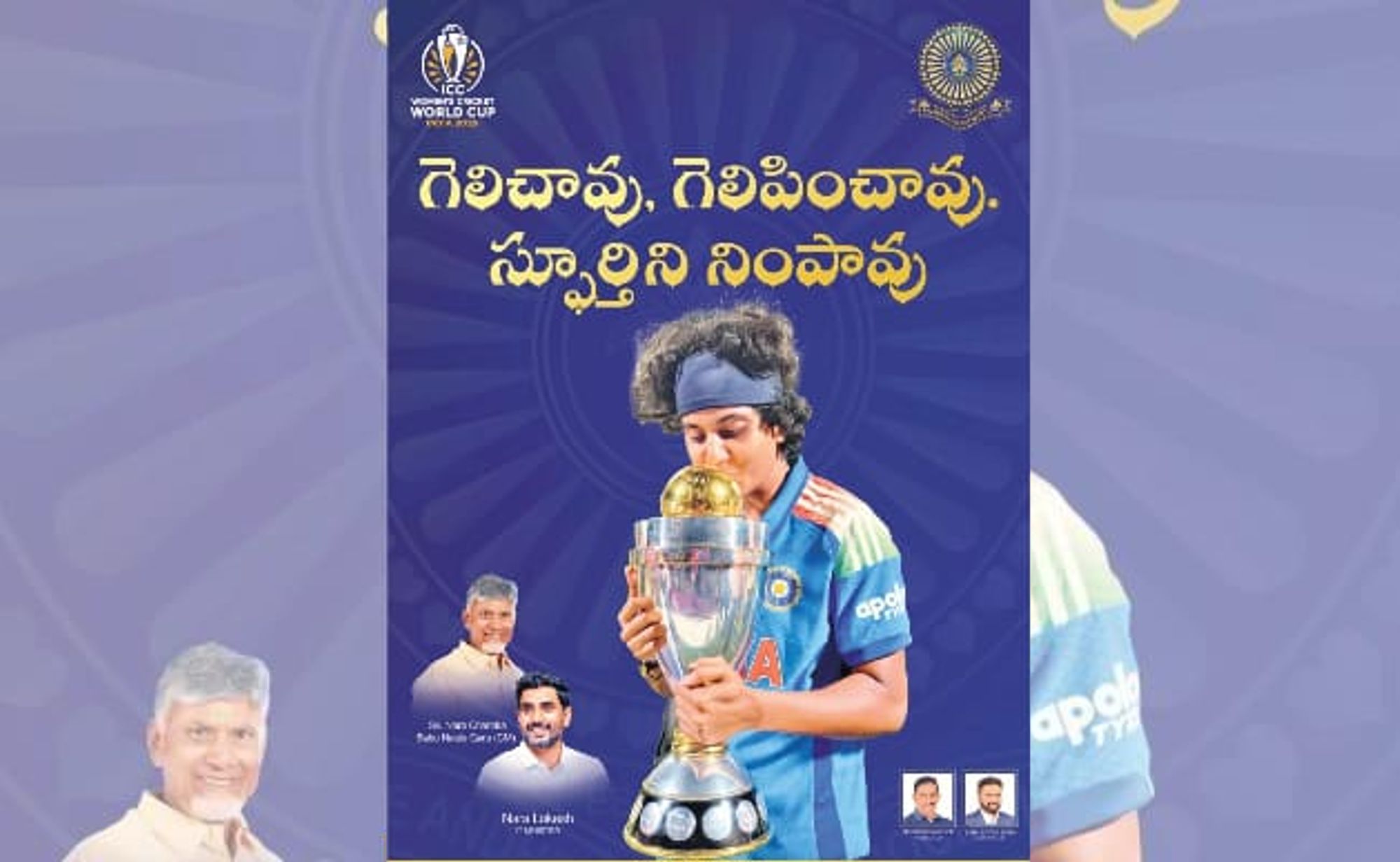
The Andhra Cricket Association has taken out a full page advertisements in Andhra’s leading dailies, Eenadu and Andhra Jothy, congratulating the state’s sole player in the Indian squad –Sree Charani.
The controversy has nothing to do with the 21-year-old player, but rather on who was omitted from the advertisement. Included in the advertisement were the photographs of the state chief minister N Chandrababu Naidu and the state IT minister Nara Lokesh.
The omission of the deputy chief minister Pawan Kalyan and the sports minister Mandipalli Ramprasad Reddy from the advertisement has caused an uproar among some quarters.
Never mind that none of the four deserve to ride on the contribution of Shree Charani in India’s success.
Politicians and administrators squeezing themselves into the limelight, riding on the success of athletes is not a new phenomenon.
They like to positively portray their role in the success, even if there were none. And they will quietly stay away when athletes come back without any success.
They use the success of athletes like Shree Charani to connect with the public, boost their own image to enhance public perception.
This is pure self-serving at the expense of the athletes themselves. Often the athlete has no choice but to accede to political demands for fear of repercussions.
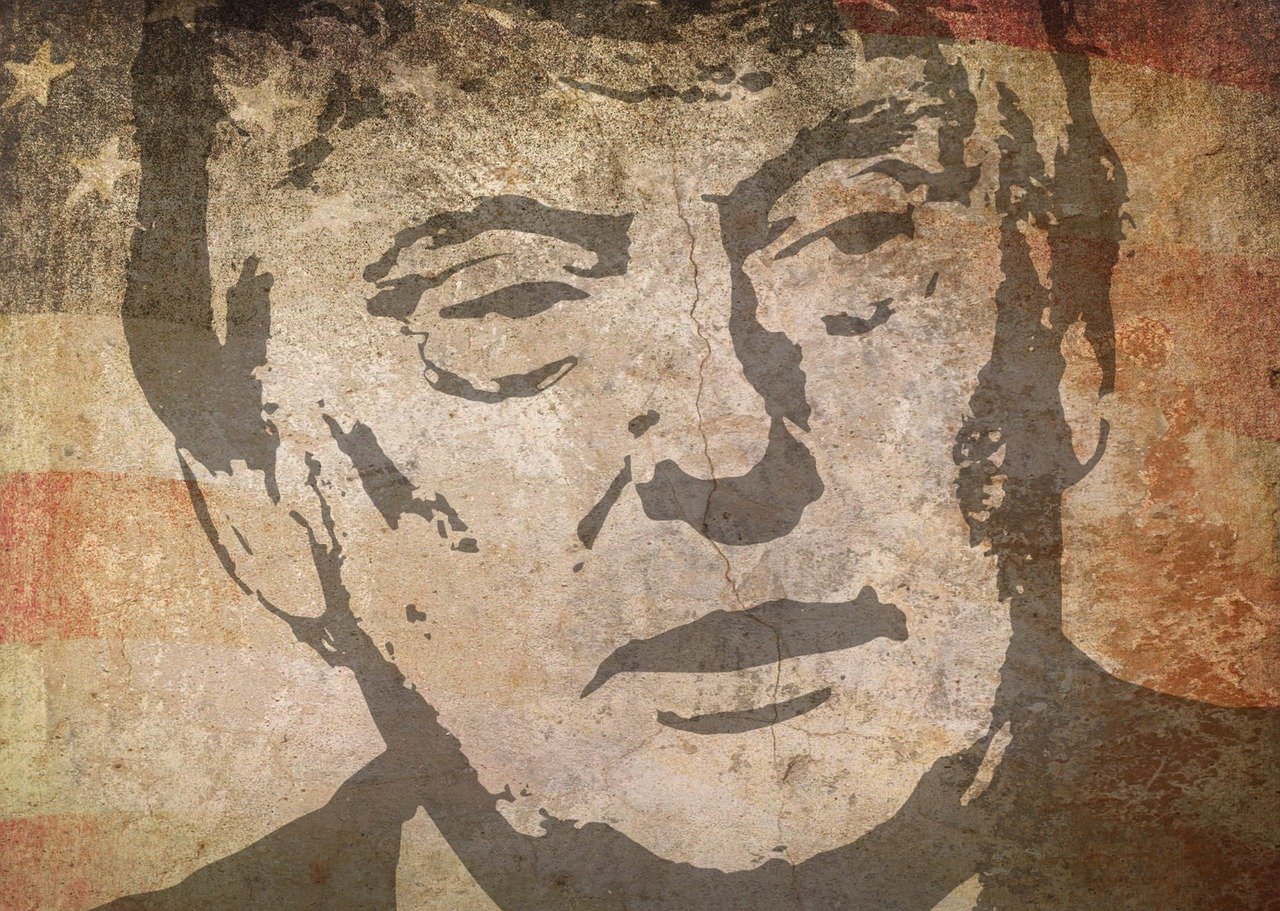
American president Donald Trump is one politician, who relishes in using sportsmen to boost his ego and political clout. And he has no qualms of throwing any dissenting athlete sunder the bus.
While some uplift the controversial president willingly, many also choose to buck the trend.
Immigration advocacy groups are calling on Los Angeles Dodgers players to skip out on a customary visit to the White House in protest of President Donald Trump’s mass deportation policy.
NBA teams Milwaukee Bucks, the Dallas Mavericks and the Memphis Grizzles, moved away from Trump hotels in Chicago and NYC as a way to avoid any implied association with the Trump when he was first elected in 2016.
How many times have we seen athletes pushed to the background while irrelevant others clamour to be in the centre-stage during prize presentation ceremonies?
How many times have we seen sports administrators pushing aside athletes to hog press interviews?
How many times have we seen athletes contribution trivialized while the administrators gloat about their minute contribution?
How can anyone forget that the legendary Jesse Owens was not permitted to enter through the main doors of the Waldorf Astoria New York and instead forced to travel up to the reception honoring him in a freight elevator. The incident took place in 1936 but even now in 2025 sometimes athletes are brushed aside for the benefit of politicians and sports administrators.
While former athletes have in recent times taken over the leadership in some sports associations including the International Olympic Council (IOC) and World Athletics, the numbers are still very low.
Former Olympian and world swimming 200m backstroke record holder Kirsty Coventry is the current IOC president while athletics middle distance legend Sebastian Coe heads World Athletics.

But opportunities for former athletes to take over the leadership of sports associations in many countries remains low due to politicking administrators having their own power ambitions.
There has always been a disconnect between the wishes of sports governing bodies and athletes in how their sports are run. There has always been a disconnect between the aspirations and needs of politicking officials and athletes.
It is just not about inserting their own photographs into the success of athletes, it is about hijacking the success stories of athletes through various forms of exploitation.
Individuals in power use media outlets to sensationalize their own role in the athletes success stories, often at the athlete’s individual achievement, privacy and well-being
Commercial brands pay athletes to align their image with a product to influence consumer behavior and increase sales. While this provides essential financial support for athletes, the massive sums involved mean athletes may prioritize marketability, and brands can exert significant control over their public persona.
At the same time companies that are not official sponsors of an event or athlete are also known to attempt to associate their brand with the popularity and success of a major sporting event or a particular athlete to gain publicity without paying for official rights.
Athletes success stories should be theirs to tell and not for others to exploit for their personal gains.
When Joseph Schooling won the island nations first ever Olympic gold in 2016, such attempts to weave their way into his success came from many quarters.
His parents, Colin and May Schooling had invested over US$1 million of their own money to fund their son’s Olympic dream, not to mention other non-monetary sacrifices like time away from their only son and adjustments to their family routine and lifestyle. Schooling himself was focused on his drive for success.
Singapore Airlines presented him the a Elite Gold Card and one million flyer miles but all that fell flat with how they positioned Schooling at their presentation function.

Not to be outdone, the then Singaporean Member of Parliament Lee Bee Wah and Grace Fu the Singapore’s Minister for Culture, Community and Youth were both panned by the general public for their attempt to insert themselves into the success through their social media posts.
Or take the recent issue in Malaysia, where sponsors pledged thousands of Malaysian Ringgits to Paris Paralympic medalists, including multiple badminton gold medalist Cheah Liek Hou, in highly promoted media event. But, they failed eventually to keep up with their commitments.
Exploitation of athletes when they succeed is as bad as the abandonment of the same athletes when they fail.
S.T. Arasu is a two-time Malaysian Sportswriter of the Year
About Post Author