Australian cricketer Usman Khawaja, recently said sporting bodies should consider banning Israel from world competitions, accusing it of breaching international law in the killing and starvation of Palestinians in Gaza.
The suggestion did not get much traction from the International Olympic Committee (IOC). Even prior to Khawaja’s call, the IOC had basically refused to look into the Israel-Palestine conflict.
Ironically, the same body had banned Russia from the Paris Olympics, due to Russia’s ongoing invasion of Ukraine in violation of the Olympic Truce. The Russians are still banned from the 2026 Winter Olympics.
Smacks of double standards doesn’t it?
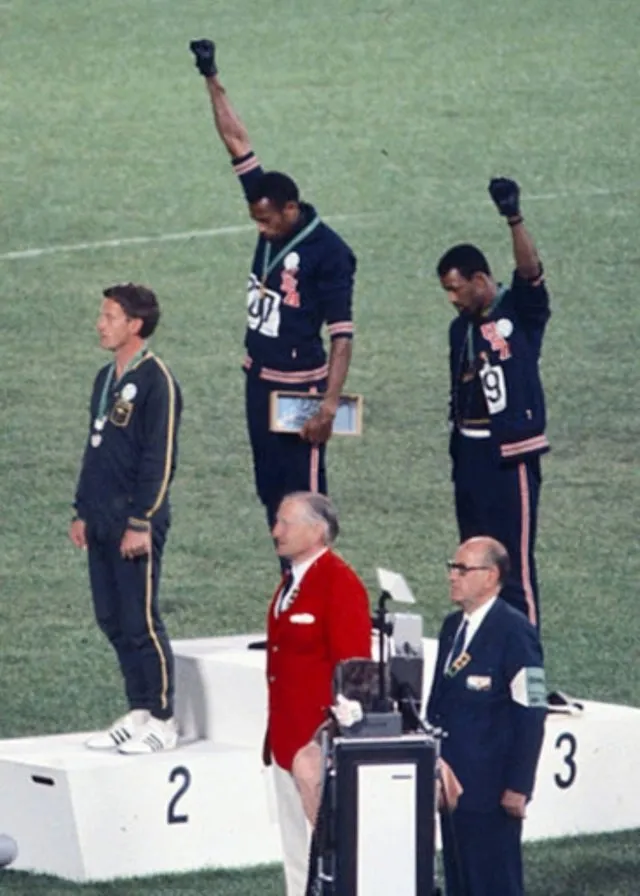
For decades the IOC had denied athletes their right to protest against social and political rights during their Games.
Their mantra that sports and politics should not mix is used sparingly and adjusted according to what’s best for them.
Until a few years ago, Rule 50 of the IOC’s Olympic Charter barred athletes from participating in “(any) kind of demonstration or political, religious or racial propaganda.”
It was only just before the Tokyo Olympics that the IOC announced changes to Rule 50 that allowed some forms of demonstrations, an attempt to respond to the reality of athlete protests.
Under the rule, athletes were able to engage in a non-disruptive demonstration to “express their views” while on the field of play before their events begin, though athletes aren’t allowed to protest during competition or while on the podium.
Double standards aside, would barring athletes from participation actually help in changing political decisions made by the likes of the leaders of Russia and Israel?
In a recent interview, European football chief Aleksander Čeferin was quoted as saying civilian suffering caused by Israel’s war in Gaza had deeply affected him, but believed players and teams shouldn’t face ineffective competition bans over conflicts waged by national leaders.
There is some merit to Ceferin’s stance.
While the athletes themselves were not responsible for their leaders’ indiscretion, they are considered as collateral damage. A collateral damage that politicians and international sports leadership thought would stop Vladimir Putin from continued military aggression against the people of Ukraine.
Surprise! It hardly changed anything.
Putin even wanted to host a Summer Friendship Games as an alternate to the Paris Olympics last year.
That some of these athletes had put blood, sweat and tears to prepare themselves for competition did not matter. Imagine the heartache of the athletes being yanked out of the last Winter Olympics at the eleventh hour.
The fact that for many of these athletes, sport is their career of choice, did not matter. But almost every Russian Embassy around the world is allowed to remain open, and the thousands of Russian businesses around the world were still being allowed to operate.
These affected athletes were indeed being ostracized and denied their rights because of the sins of the powerful.
What mattered were the perceived portrayals that sports “was responding to put pressure on the Russian hierarchy to withdraw their troops from Ukraine”.
For Putin, it really does not matter whether the sports fraternity in Russia suffers, when he has absolutely no empathy for the suffering of the common man in Ukraine or even in his own country.
While the merits of the sports boycott of Russia is now clearly evident, the IOC and most International Federation have closed both eyes when it came to the indiscretion of their own membership in denying athletes of their rights.
Has sports boycott and other prohibitions actually helped Ukraine or have they just created a paradoxical effect? Will a suspension of Israeli athletes be any different?
Let’s not also forget about the South African sports boycott, because of its apartheid policies, started in 1977 and only ended in 1990 when the regime fell. It was the athletes that suffered.
The injustice to the athletes was even longer if you also consider the fact that South Africa was first barred from the Olympics in 1964.
Most international sports are no longer amateur sports. This is a professional era and sports and the athletes are part of a multi-billion-dollar industry. They earn honest living through sports.
Sports cannot and should not allow power crazed warlords and leaders, who have no interest of athletes’ welfare and needs, to control basic rights of participation.
Both sports and political leaders are hardly affected but the athletes are made to suffer for their sins.
The IOC has done virtually nothing when it comes to countries like the USA, which has been enacting laws against the participation of transgender athletes. An increase of natural testosterone level has been enough for many IF’s including the IOC to ban female athletes’ participation at international meets.
The IOC and the IF’s do not even bat an eye when national federation victimize athletes, often hiding behind the cloak of national autonomy.
Sport is an industry and athletes are valuable commodities. Left at the hands of the incompetent, and power hungry, the industry and the product would naturally suffer.
S.T. Arasu is a former two-time Malaysian Sportswriter of the Year
About Post Author